
The Dopler Method: Building products that stick
Surface Area, Distribution, and Leverage. Why persistence compounds and how to survive the third year as a Sovereign Architect.
Written byGrootMade••4 min read
When I was younger, a mentor within the "Old Guard" told me something I didn't truly grasp until the gates were closed on me. He ran one of the original software repositories, and one day he said:
"In the first year, they'll ignore you. In the second, they'll try to regulate you. But it's the third year that decides if you are a transient merchant or a Sovereign Architect." - A Ghost of the Old World
Back then, I thought the digital realm was different. Faster. I saw headlines about solo developers going from zero to millions in weeks, apps exploding overnight, and "GPL Kings" rising from nothing. It felt like success was a lightning strike.
But it isn't.
What you don't see in those stories are the years of invisible architecture, the failed scripts, the ignored audits, and the repositories nobody cared about. Online, the rule is the same as in any empire: Persistence compounds.
In a noisy, oversaturated world, it is not enough to just build a great product. Most great products die quietly in the shadows. If you want to build something that sticks, something that survives a ban, a migration, or a market crash, you need more than clever code. You need Surface Area, Distribution, and Leverage.
The Two Archetypes of the Digital Realm
Before we talk about why products fail, we need to zoom out. There are two fundamental ways to manifest power online: You can sell your Time, or you can sell your Intellectual Property (IP).
1. The Mercenary (Linear Growth)
This is the "safe" path. You work, you get paid. But it ties your existence to your availability.
- Agencies & Freelancing: You package your expertise and deliver outcomes for clients. It builds cash flow and credibility fast, but it stalls the moment you stop "doing."
- Consulting & Mentorship: High hourly rates, but your authority is the bottleneck. If you aren't in the room, the money isn't in the bank.
Selling time is for survival. It gives you the "war chest" to fund your long-term bets. But as long as your income depends on showing up, you haven't achieved Sovereignty.
2. The Sovereign (Leveraged Growth)
This is the "build once, manifest forever" model. The effort is massive, but the upside is asymmetric.
- The Vault (Digital IP): Templates, plugins, kits. Package your knowledge and sell it infinitely. Near-zero marginal cost per user.
- The Engine (SaaS): Software compounds. One codebase, like our Puma-threaded infrastructure, serves 25,000+ creators without more work per user.
- The Sanctuary (Communities): Relationships are moats. People stay for the belonging, long after the features have become standard.
Why Most Products Fail (The Assumption Trap)
98% of products shut down within the first year. It's tempting to blame technical expertise or "hustle." But that isn't the truth.
Most products fail because they are built on assumptions, not about what to build, but about how people will care.
I saw this with my first legacy tools. They were technically immaculate, purged of rubbish, and genuinely superior. I thought quality would speak for itself. I expected the world to "just get it."
But the silence was deafening.
I had built for power users but expected mass adoption. I didn't share the "Why." I didn't educate the builders. I assumed people understood the "Pure Code" philosophy as deeply as I did. It wasn't the wrong product; it was a lack of Surface Area.
Surface Area: The Missing Multiplier
Surface Area is the sum of every touchpoint that gives someone a chance to find you, understand you, and trust you.
- Your Repository (The Code)
- Your Manifesto (The Writing)
- Your Infrastructure (The Engine)
- Your Audit Logs (The Proof)
Each one is a signal. And signals compound. When we launched the Elite Hub, we didn't just launch a "site." We launched an idea. We threw away the old forum-style "zip file" logic and rebuilt everything from scratch, styling, components, and S3-backed delivery.
We optimize for the solo developer who doesn't care about "tech stacks", they care about things that "Just Work." Every blog post, every tweet, and every audit became another touchpoint.
Surface Area builds Familiarity. Familiarity builds Trust. Trust builds Empires.
Distribution: The Technical Leverage
Building is a joy; distribution is a grind. But ignoring distribution is what kills products. It is the invisible machinery that most architects underestimate:
- Puma-threaded speed for seamless requests.
- Wasabi S3 Resilience so assets never decay.
- Identity Bridges (Auth) that recognize legacy keys.
- Automated Analytics that tell you what the 25,000+ actually need.
We invested in our own stack early, Puma + Sidekiq + S3. It was harder than using a generic forum plugin, but it gave us the freedom to own the relationship with our users.
The Lesson: Price for demand, not value. Our auditors said our price was "too low." We did that on purpose. Your first 100,000 users aren't buying "value", they are buying Trust. Once the trust is locked in, the growth becomes inevitable.
The Takeaway
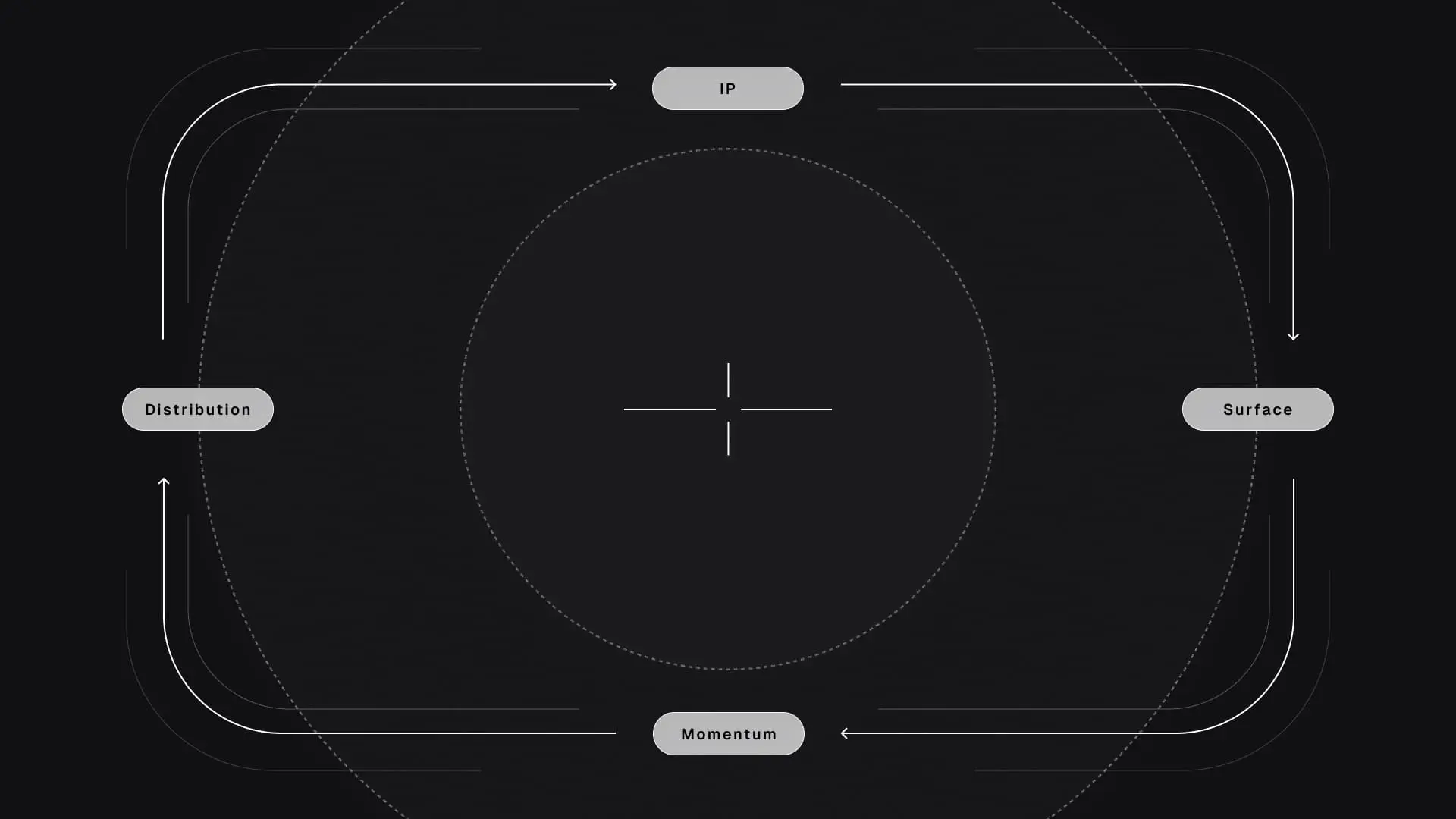
Products stick because of the interplay between four pillars:
- Intellectual Property: The "Relic" you created.
- Surface Area: The ecosystem of signals around it.
- Momentum: The pull of the 25,000+ who validate it.
- Distribution: The technical engine that carries it.
If one is missing, the architecture collapses. A great relic without surface area is invisible. Surface area without distribution is just noise.
Start small. Build in parallel. Grow in public.
Your Next Steps to Sovereignty
-
Build Your IP Early: Ship something opinionated today, a single component or a refined script.
-
Expand Your Surface Area: Share the "Why" behind the code. Don't just post a link; post an audit.
-
Offer a "Sovereign Deal": Underprice your offer until the trust is absolute.
-
Own Your Distribution: Move away from "rented" platforms. Build your own stack. Own your data.
-
Play the Long Game: Measure success in touchpoints, not just revenue. Every interaction is a seed for the third year.